Walk into a library in Mathare on a sunny afternoon, and you’ll hear it — pages turning, pencils scratching, quiet curiosity filling the air. It’s not just a room of books. It’s a room of possibility.
Here’s something that might surprise you — Kenya’s national literacy rate sits around 82.88%, but in places like Mathare and Kibera, the reality tells another story. In these informal settlements, nearly 4 out of 10 children aren’t in school. What? Yes, thousands of bright minds simply miss the chance to read, write, and dream beyond the slum walls.
And why? Poverty. When families are choosing between a meal and a schoolbook, education often loses.
Across Nairobi’s informal settlements, the literacy gap between slum and urban areas remains wide. Overcrowded classrooms (sometimes with 80+ pupils per teacher) make it hard for children to catch up. Many never even start. According to recent data, 1.5 million school-aged children in Kenya are out of school — and a large chunk of them live right here, in Nairobi’s poorest neighborhoods.
But here’s where hope flips the script.
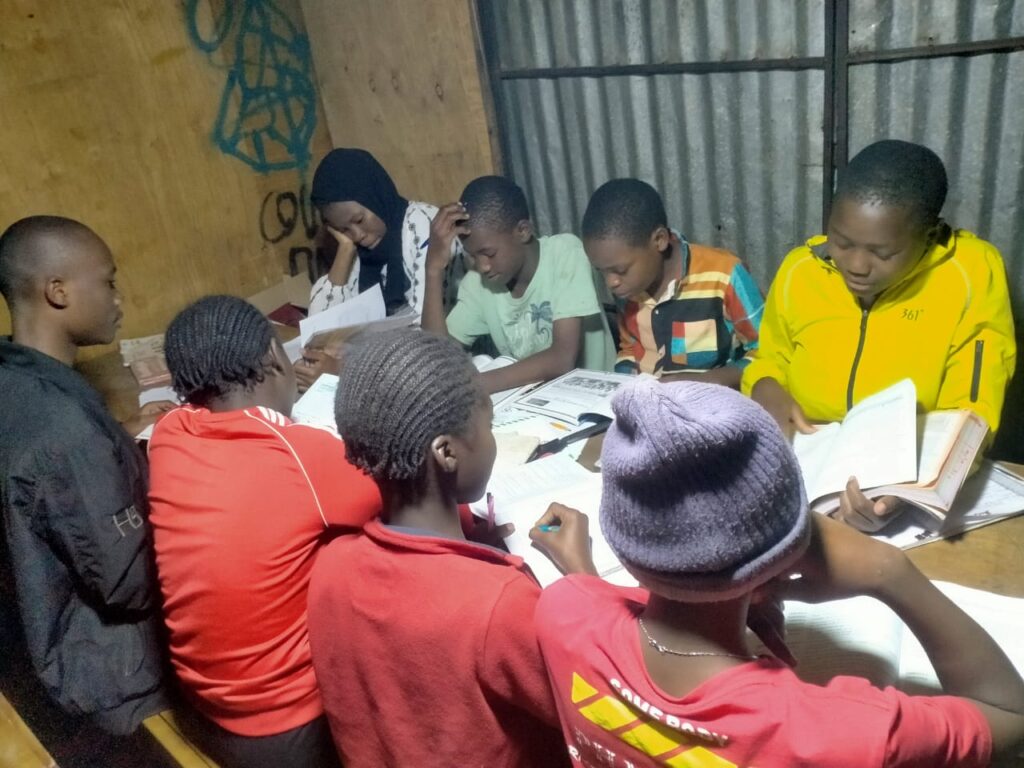
In the heart of Mathare, community libraries are doing something powerful. They’re not just offering books — they’re building bridges out of poverty. When a child steps into the library, they step into a world where learning is free, safe, and inspiring. Some kids come in shy, barely able to read a sentence. Months later, they’re devouring storybooks, asking questions, and even helping others sound out new words.
It’s more than education — it’s transformation.
Research shows that literacy programs in slum areas significantly improve confidence, school enrollment, and even reduce dropout rates. Girls who have access to books and after-school reading clubs are far more likely to stay in school — directly challenging the gender literacy gap, where over 20% of Kenyan women above 15 remain illiterate.
And when you compare literacy rates between urban schools and those in informal settlements, you see it: access is everything. Urban schools have better facilities, more teachers, and digital tools. But a small library in Mathare? It can rival them in impact — because it gives children ownership of learning.
Every page turned is a quiet rebellion against poverty.
So yes, breaking poverty with books isn’t just poetic — it’s practical. It’s what happens when a community decides that knowledge, not circumstance, should define a child’s future. In Mathare, that’s not a dream. It’s happening every single day — one book, one child, one page at a time.
Good work you are doing here