“Education is the most powerful weapon which you can use to change the world.” — Nelson Mandela
Why Education Matters in Slum Communities
Take Mathare, one of Nairobi’s largest informal settlements. Studies show that school enrollment in slums is 10–15% lower than national averages, and dropout rates are painfully high. Poverty pushes kids into child labor instead of classrooms.
Yet every statistic tells us the same thing:
- People without a diploma face a 25.1% poverty rate, while those with a degree? Only 4%.[2]
- Every extra year of schooling can raise lifetime earnings by 10%.[7]
In other words, education isn’t just learning—it’s economic mobility, dignity, and hope.
Breaking the Poverty Cycle
Here’s what happens when a child in Mathare gets an education:
- They break free from low-wage, unstable jobs.
- They access opportunities that lift their entire family.
- They inspire their community to believe in something better.
Education doesn’t just change one life—it multiplies change across generations.
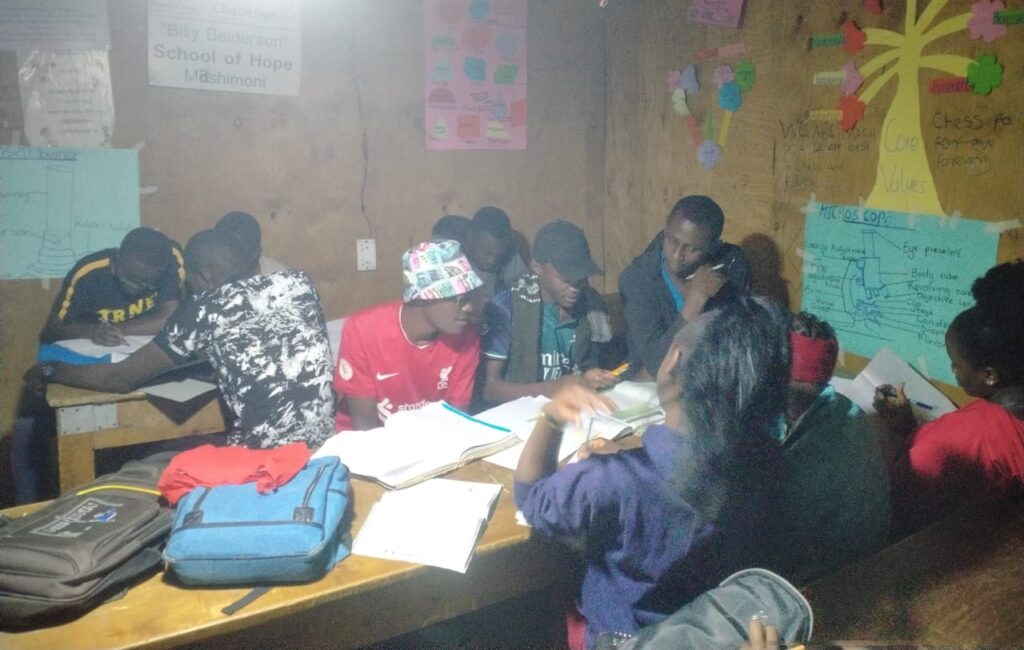
The Challenges We Can’t Ignore
Of course, we can’t talk about education without facing the barriers:
- Lack of resources – Overcrowded classrooms and underfunded schools.
- Poverty impact – Kids going to class hungry, unable to concentrate.
- Exclusion – 47% of slum children rely on low-fee schools excluded from free government programs.[4]
But that’s exactly why we must keep fighting for it. Every investment in education is an investment in freedom.
What This Means for Mathare’s Future
Imagine a Mathare where every child has:
- Books on their desks instead of burdens on their backs.
- Skills in their minds instead of survival struggles in the streets.
- Dreams within reach instead of cycles they can’t escape.
That’s not just a vision. It’s a reality we can build—one classroom, one child, one opportunity at a time.
💡 If you take away one thing, let it be this:
Education is not charity. It’s justice.
And it’s the most sustainable way to break the chains of poverty in slums like Mathare—for good.